PSNI and PPS launch joint strategy to improve handling of serious sexual offences
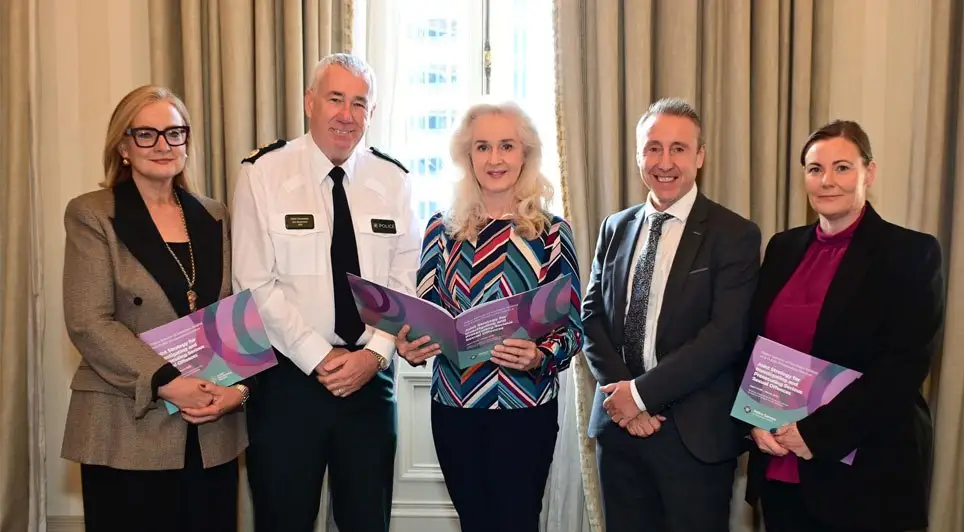
The Police Service of Northern Ireland and the Public Prosecution Service have jointly launched a five-year strategy to improve how serious sexual offences are investigated and prosecuted.
The strategy, covering 2026 to 2031, is the first jointly developed between the two bodies. It sets out two main ambitions: that no victim withdraws from the criminal justice process because of their experience of investigation or prosecution, and that the time taken to investigate serious sexual offences and reach prosecution decisions is reduced by one third over the life of the plan.
Currently, the median time from initial police report to a prosecution decision is 224 days. The PSNI and PPS are aiming to reduce this by around 75 days. The strategy focuses on four outcomes: better trauma-informed support and clear communication for victims; faster progression and high-quality case files; stronger leadership and accountability; and continued development of specialist investigators and prosecutors.
A two-year action plan underpins the strategy, with annual public reporting against agreed performance measures. New governance arrangements include a Sexual Violence and Abuse Strategic Oversight Board and an Independent Consultation Group.
Detective Chief Superintendent Zoe McKee, head of the PSNI's Public Protection Branch, said that every report of a serious sexual offence represents a person who has placed their trust in police at what may be one of the most difficult moments of their life. She said the strategy reflects a determination to improve, shaped by listening to victims, partner organisations and staff.
PPS Senior Assistant Director and Victim Champion Marianne O'Kane said victims are at the heart of the strategy. She noted that for many victims, their experience of the criminal justice system can be as important as the outcome of a case. She said achieving the strategy's ambitions will require sustained investment across the criminal justice system to ensure specialist teams have the resources needed.
The strategy is supported by testimony from survivors, including Nicola Bannon, who was abused by a teacher as a teenager. Bannon endorsed the new approach, urging others to report sexual abuse. She highlighted the value of remote evidence centres, which allowed her to give evidence without seeing her abuser. Her abuser, William Lloyd Lavery, was sentenced in April to two years' imprisonment for six counts of indecent assault of a child.
Separately, Justice Minister Naomi Long has launched the 'Justice is Changing' campaign to raise awareness of services for victims of sexual crime. The campaign highlights measures developed in response to the independent Gillen Review, published in 2019, which made 253 recommendations.
Long said victims of sexual crime told the Gillen Review that the justice process could often exacerbate their trauma through delays, invasions of privacy and lack of support. She said the department has listened and directly addressed these concerns through new measures.
Key changes include remote evidence centres in Belfast and Craigavon, where over 600 vulnerable witnesses gave evidence in 2025, with conviction rates around 90 per cent. The Adult Sexual Offences Legal Advisor scheme has supported more than 2,200 people since its launch in 2021, and a child-focused version has assisted over 400 children since 2025.
Legislative reform through the Justice (Sexual Offences and Trafficking Victims) Act 2022 strengthened anonymity protections and increased penalties for breaches. Committal reform removed the need for victims to give oral evidence at two separate hearings, and a judge-led protocol aims to reduce delay in cases involving young children. The Belfast Domestic Abuse Contest Court prioritises victims by ensuring all complainants give evidence from a remote centre.
Long said she is working towards introducing a Barnahus-type model in Northern Ireland, creating media guidance on reporting of sexual crimes, and introducing new measures in the Victims and Witnesses Bill to further protect disclosure of complainants' personal information.