Northern Ireland High Court Orders Return of Four-Year-Old to US in Hague Abduction Case
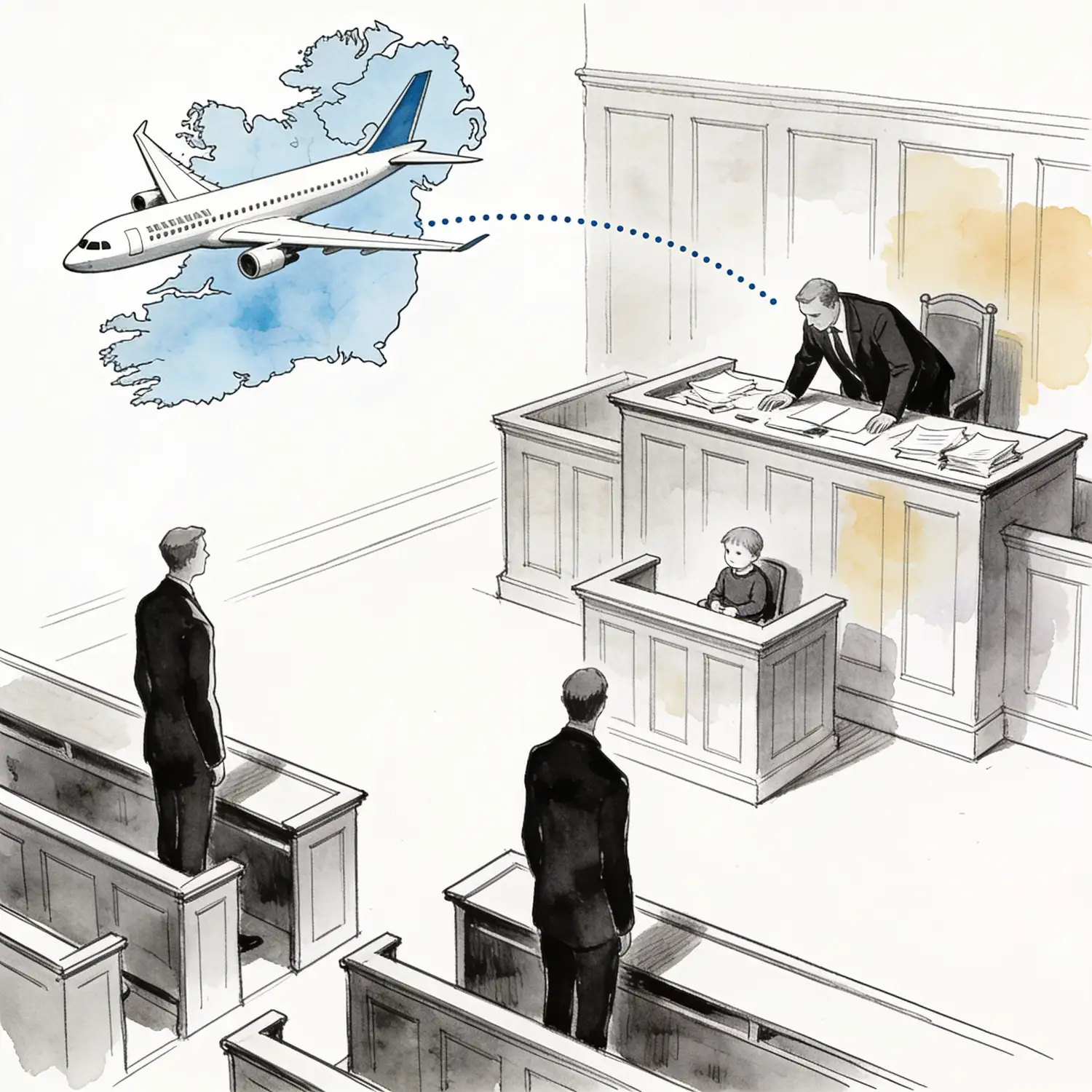
The High Court in Belfast has ordered the return of a four-year-old girl to the United States after finding she was wrongfully retained in Northern Ireland by her mother. The decision, delivered by Mr Justice Humphreys on 21 August 2026, relates to a child identified as GW, whose father brought proceedings under the Hague Convention on the Civil Aspects of International Child Abduction.
The child was born in the United States and is habitually resident there. She travelled to Northern Ireland with her mother, MR, in December 2025, with the father's consent for a trip that was due to end on 10 March 2026. However, the mother decided in February 2026 not to return and has remained in Northern Ireland since. The father, JW, did not consent to the retention after 10 March 2026.
The central issues were whether the father was exercising rights of custody at the time of retention and whether returning the child would expose her to a grave risk of harm. The mother argued that interim orders from a California court, made on 24 December 2025 following her application for a domestic violence restraining order, had granted her sole legal and physical custody. Those orders included a temporary restraining order and a child custody and visitation order issued ex parte. The father disputed the allegations and sought joint custody.
Mr Justice Humphreys held that the father was still exercising rights of custody immediately before the retention. He noted that the California orders were interim and did not extinguish the father's right to veto the child's removal from the jurisdiction. Citing case law including Re A (Abduction: Rights of Custody: Imprisonment) and others, he concluded that the retention was wrongful under Article 3 of the Convention.
The mother also invoked the grave risk defence under Article 13(b), citing allegations of serious domestic abuse, including physical and emotional abuse of the child. The court followed the three-stage approach from earlier cases, asking whether the allegations could be confidently discounted, whether taken at their highest they established a grave risk, and whether protective measures could mitigate the risk.
The judge was unable to confidently discount the allegations, given the mother's history of reporting abuse to medical professionals and services in both the US and Northern Ireland. Taking the allegations at their highest, he found they would establish a grave risk of physical or psychological harm to the child, who has vulnerabilities including reported self-harm and emotional dysregulation. However, he stressed he was making no factual findings and that the California courts would address these matters at hearings scheduled for September and October 2026.
To address the risk, the father offered a series of undertakings, including financial support, accommodation, no direct contact with the mother, surrender of firearms, and supervised contact only with the child. The court also noted the existing California orders, including the temporary restraining order and the upcoming evidentiary hearing.
Mr Justice Humphreys concluded that the protective measures, including undertakings that would be lodged with and enforceable in the California court, were sufficient to meet the risk identified. He therefore rejected the grave risk defence, made a return order, and directed the release of the judgment to the California court and the parties' legal representatives. The court will hear the parties on the precise terms of the order.
The judgment was anonymised to protect the identity of the child and her parents.