Duke of Gloucester previews restoration of WWII RAF Trainer Dome in Artikelly
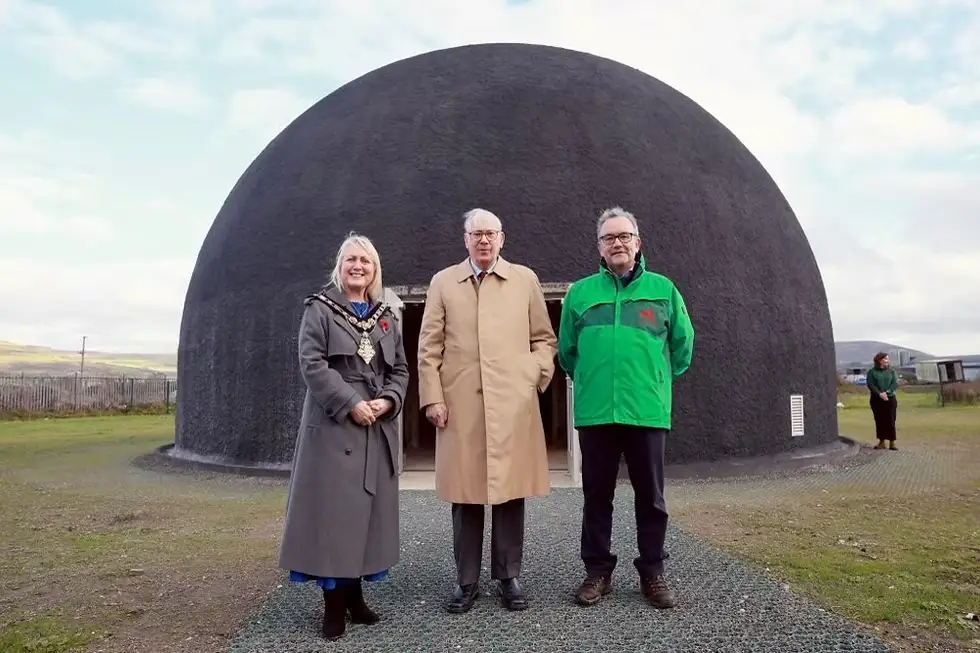
The Duke of Gloucester has visited Artikelly to preview conservation work on a Second World War RAF Trainer Dome. The structure, built in 1942, is a Scheduled Historic Monument and the only remaining RAF Trainer Dome on the island of Ireland. It is one of six surviving examples across the United Kingdom. The Dome was originally used to train anti-aircraft gunners using early audio-visual simulation.
The visit allowed the Duke to meet project staff, the architectural design team, contractors, funders and supporters. The project is part of the Binevenagh & Coastal Lowland Landscape Partnership Scheme and receives support from The National Lottery Heritage Fund, Causeway Coast & Glens Borough Council and other partners.
Mayor of Causeway Coast and Glens Borough Council, Councillor Dawn Huggins, said the project demonstrates what can be achieved through partnership and a shared commitment to protecting heritage. She described the restoration as an important investment in local history, ensuring the landmark can be enjoyed and learned from by future generations.
Edward Mason, Chief Executive Officer at Causeway Coast & Glens Heritage Trust, said the Duke's visit showcased the transformative power of investment in the historic Trainer Dome. He thanked The National Lottery Heritage Fund, the council and other partners, noting that National Lottery players had helped rescue heritage at risk and secure the Dome's future as a learning and community asset.
The restoration follows a 'curated decay' philosophy, which preserves the Dome's authentic historical character and weathered texture while securing its structural integrity. Work carried out over recent months has included installing an internal galvanised steel substructure covered with a tensile fabric skin to create a 360-degree immersive projection surface.
Stella Byrne, Northern Ireland Director at The National Lottery Heritage Fund, said the conservation provides a sustainable future for the monument and offers visitors and local people the opportunity to learn more about the history and heritage of the landscape.
The project team aims to reopen the Dome as an immersive projection lab and community space as early as next year. The work also creates opportunities for production skills training, community engagement, cultural heritage interpretation and tourism close to the Causeway Coastal Route.