New book alleges Ulster Resistance armed Johnny Adair weeks after rise to power
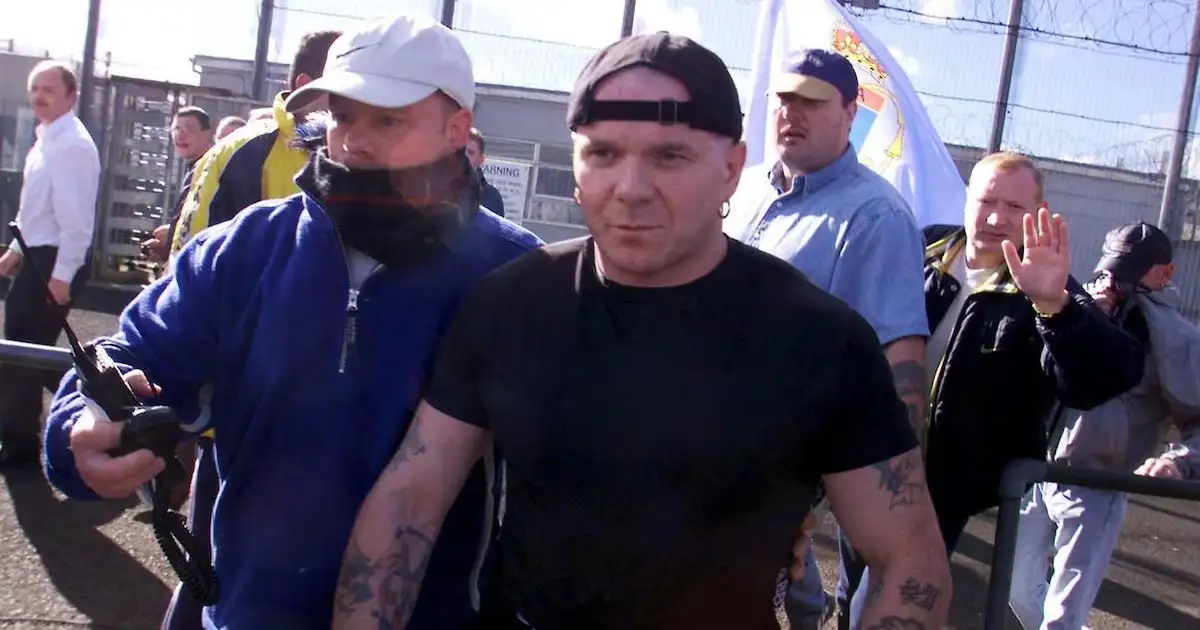
Johnny Adair was supplied with weapons by the Ulster Resistance group just weeks after becoming a prominent figure in the Ulster Freedom Fighters, according to a new book by academic Aaron Edwards.
The book, Enemies Within, based on years of research and multiple interviews with Adair, who now lives in Scotland, alleges that in 1990 Adair drove to a farm near Loughgall, Co Armagh to meet members of Ulster Resistance.
The group, described as a loose network of farmers, businesspeople and members of the Ulster Defence Regiment, had smuggled large quantities of weaponry from Lebanon, Edwards writes.
Ulster Resistance was founded in 1986 by Ian Paisley and was never part of the talks that led to the Belfast Agreement or subsequent decommissioning of weapons.
Edwards describes the group's members as pillars of the community who knew how to plan but not how to kill, which was where Adair came in.
Following two seizures of loyalist weapons by security forces, Ulster Resistance was suspicious of informers within paramilitary ranks.
Partially convinced by Adair's rhetoric that he would take the fight to the IRA, they agreed to a test run, sending VZ58 assault rifles, RPG-7 rocket launchers and grenades to Belfast hidden in a truck carrying a new kitchen.
The first victim of the newly armed UDA C Company was 44-year-old Sean Rafferty, shot at his home in Rosapenna Court, north Belfast in January 1991 solely because he was a Catholic.
Adair's growing importance led the IRA to plan to kill him by driving a stolen JCB carrying a bomb into a shebeen used by loyalist paramilitaries, but the plan was blocked by the IRA army council.
Adair also claims a senior police officer offered him £50,000 cash in a suitcase to stop his killing campaign in 1992, after his arrest following the murder of Philomena Hanna, a 26-year-old mother of two shot behind the counter of a chemist shop on Lanark Way by one of Adair's gunmen, Stephen McKeag.
Adair refused the money because money was never his God.
The book claims the fear created by Adair led senior republican Sean Murray to call senior UDA figure Tommy Potts offering a deal.
Adair told one RUC officer at the time that he loved a wee bit of ethnic cleansing.
An undercover British soldier from the 14th Intelligence Company tried to kill Adair outside his home in March 1993 after Adair confronted him with a friend, Donald Hodgen, who was shot three times.
The RUC investigation found the soldier fired four shots, claiming he felt his life was in danger.
In 2002, an attempt on Adair's life by members of his own organisation was foiled when two gunmen were knocked off their motorcycle by an RUC van just as Adair left his Boundary Way home to take his daughter to primary school.
The RUC said the gunmen had been acting suspiciously, but it was later alleged that intelligence came from a listening bug in a UDA commander's home.
The book outlines how Adair changed the culture of his support into a group of hardened assassins, even though most UDA members were involved only in running clubs or extorting money.
Not everyone was expected to be involved in violence, but they were required to help out as drivers, couriers, or to offer safe houses, and had to attend monthly meetings.
One then-member said the whole feel of the organisation changed by the week, and being a UDA man now had meaning.
The danger posed by Adair to the attempt to bring about a political deal led the RUC to target known loyalist terrorists, including Adair, in the run-up to December 1993.
In June 1993, shortly after an attack on Gerry Adams' west Belfast home, senior security chiefs met in Stormont and accepted that all past efforts to curb Adair had failed.
RUC deputy chief constable Blair Wallace decided to put Ronnie Flanagan, then in charge of the RUC in Belfast, in charge of a dedicated team to bring Adair to trial.
Using newly passed legislation that created a charge of directing terrorism, RUC officers were told from the highest level they had to get Johnny Adair off the streets.
Northern Ireland secretary of state Patrick Mayhew kept closely in touch with the investigation, especially after it emerged that Adair's group had got supplies of a powerful commercial explosive, X1.
Briefing prime minister John Major, Mayhew said the recent upsurge in loyalist attacks had unsettled Catholic communities and that the security forces faced a difficult situation on two fronts.
The head of the UK's joint intelligence committee Pauline Neville-Jones had already warned Major that loyalist terrorists' success was a symptom of the increasing alienation of the Protestant community frightened about its future.
In late 2004, shortly before Adair was released under the terms of the Belfast Agreement, senior loyalist paramilitary leaders sought protection from the Northern Ireland Office once he was back in the community.