Assembly Rooms history told through new exterior panels
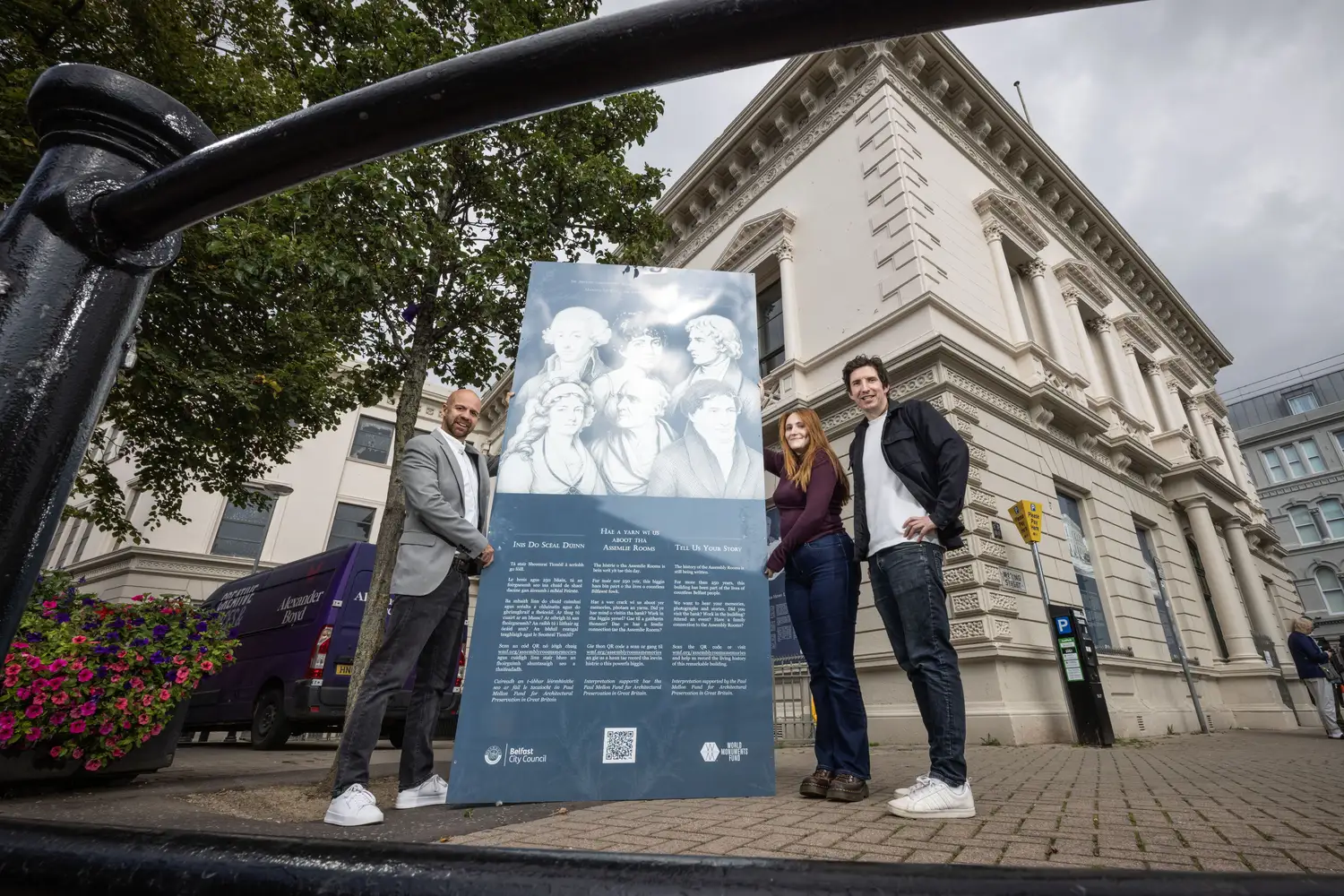
Belfast's Assembly Rooms now features 29 new exterior panels detailing its history. The panels are in English, Irish, and Ulster Scots, and trace the building's evolution from an 18th-century market hall to a social hub and later bank headquarters.
Belfast City Council installed the panels in partnership with World Monuments Fund (WMF). The project follows a conservation management plan by James Grieve Architects that provides a framework for future maintenance and sustainable use.
Councillor Joe Duffy, chair of the council's City Growth and Regeneration Committee, said the interpretation will help residents and visitors appreciate the building's significance. He encouraged those with memories of the building to share them.
The panels highlight key people associated with the building, including Dr James McDonnell, a physician who organised the Belfast Harp Festival in 1792, and Martha McTier, who helped establish a maternity charity.
Recent facade work uncovered a fading hand-painted sign, a 'ghost sign' from the building's commercial past. The interpretation draws attention to it and to a night safe, a deposit box used when the building housed the Belfast Banking Company until 2000.
James Grieve said the research revealed many layers of Belfast history in the building, and he was pleased to see the stories shared publicly.
WMF is collecting memories, photos, and stories about the building, particularly its time as a bank, as part of ongoing historical research. Magnus von Wistinghausen, WMF Britain executive director, said the project aims to protect the building and help people connect with it.
The Assembly Rooms is part of wider regeneration in the city centre, including the planned Belfast Stories visitor attraction due to open in 2030.