DAERA Advises Post-Calving Management to Meet Suckler Cow Scheme Targets
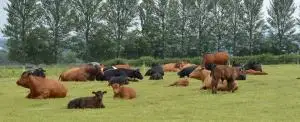
The Department of Agriculture, Environment and Rural Affairs (DAERA) has issued guidance on post-calving management for autumn calving suckler herds, stating that good management in the weeks after calving is essential for herds to achieve a calf per cow per year.
According to DAERA, cows must return to oestrus quickly after calving and conceive within a tight breeding window to maintain a 365-day calving interval. The department advises that attention to cow nutrition, body condition score and health can help cows return to service sooner and improve conception rates.
Autumn calving cows should ideally maintain a body condition score of 2.5 to 3.0, DAERA said, with regular condition scoring to identify animals needing additional nutritional support. Silage should be analysed and diets balanced to meet energy and protein requirements, with supplementary feeding where forage quality is poor. Adequate feed space, unrestricted access to water and careful ration formulation are also required, particularly as cows may be housed for much of the breeding season.
DAERA highlighted that first-calving heifers have additional nutritional requirements for growth and should be separated from mature cows to allow management according to their specific needs. Farmers are also advised to avoid major changes in the ration between six weeks before and after the service period.
Health issues around calving, including difficult calvings, retained placenta and uterine infections, can delay reproductive recovery and reduce conception rates. DAERA advises close monitoring in the weeks following calving and seeking veterinary advice where problems are identified.
The guidance is linked to the Suckler Cow Scheme within the Sustainable Agriculture Programme, which provides financial support to beef farmers who adopt practices aimed at improving herd performance and reducing greenhouse gas emissions. For the current scheme year, up to 31 March 2027, the maximum age at first calving is 32 months and the maximum calving interval is 405 days.
For Scheme Year 3, from 1 April 2027 to 31 March 2028, farmers will be required to achieve tighter performance targets. A heifer's first calf must be born when the animal is between 21 and 31 months of age inclusive, and the interval between successive calving events must be between 271 and 395 days inclusive. DAERA noted that while an ineligible calving event will not attract a payment, it will still be used in the calculation of the next calving interval.
Farmers are encouraged to observe cows carefully for signs of heat and ensure breeding plans are in place well before the start of the breeding season, with regular performance recording and review to identify problem cows early.