Coroner's inquiry finds Iron Age woman was decapitated over 2,000 years ago
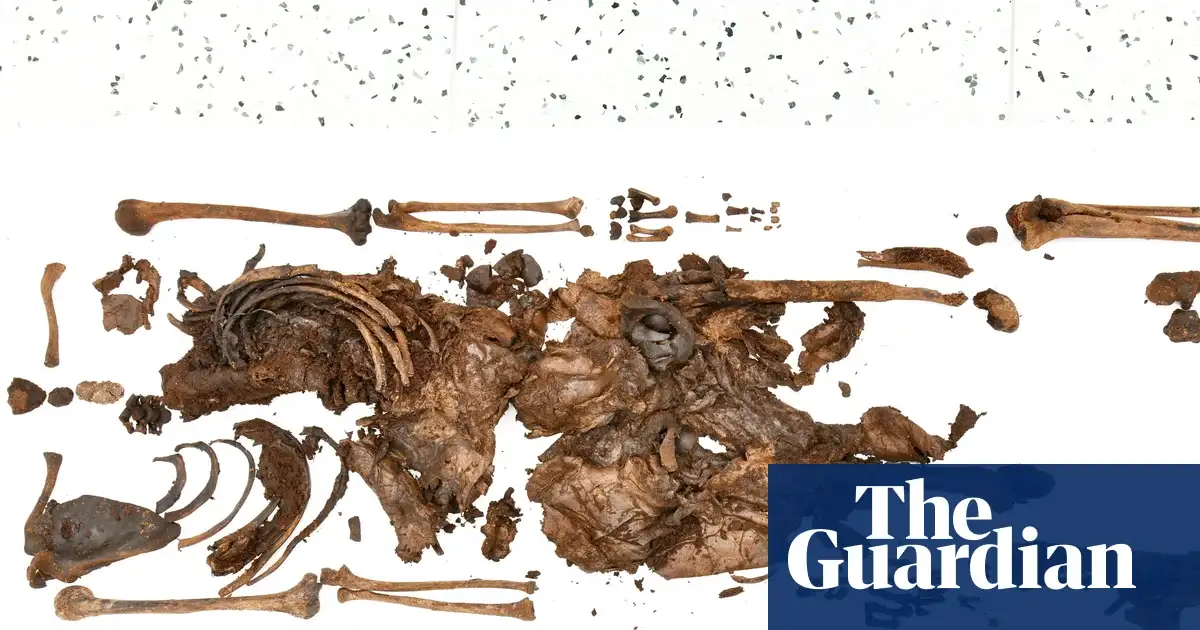
A coroner-led investigation has concluded that the remains of a young woman found in a County Derry bog were decapitated more than 2,000 years ago. The inquiry, held at the Ulster Museum, found that the woman, known as Ballymacombs More Woman, was between 15 and 22 years old when she was killed by a blow from behind with a bladed weapon.
The investigation was not a formal inquest but followed the structure and methodology of a coroner's inquiry. It was chaired by the coroner for Northern Ireland, Joe McCrisken, and drew on archaeological, forensic and scientific evidence. McCrisken said the process was intended to provide a framework to assess the evidence and to tell the story of a previously unknown young woman, rather than to impose modern legal conclusions on the distant past.
Peat workers discovered the remains in a bog in the townland of Ballymacombs More outside Bellaghy in October 2023. An archaeological excavation subsequently uncovered bones, though no skull, and a woven artefact. The body was initially thought to be male and was referred to as Bellaghy Boy before being identified as female and renamed.
The precise circumstances of the woman's death remain unknown, but evidence suggests it was part of a tradition of ritualised killing and sacrifice documented among other Iron Age bodies found across north-western Europe. The inquiry used techniques including micro-CT scanning, digital mapping and 3D imaging, and heard from witnesses including Police Service of Northern Ireland officers and employees of Bulrush Horticulture, whose work led to the discovery.
Hannah Crowdy, head of curatorial at National Museums NI, said the research had allowed the woman's story to be shared with clarity and confidence, and that she had provided significant insight into the Iron Age and how society has evolved over time. Crowdy added that the remains would be a crucial resource for research and learning.
The investigation was held under the judiciary's outreach programme with the approval of the Lady Chief Justice, Siobhan Keegan, and involved specialists from Irish, UK and Danish universities.